
Mach 2 by rail: a journey of four Concordes & one Concordski
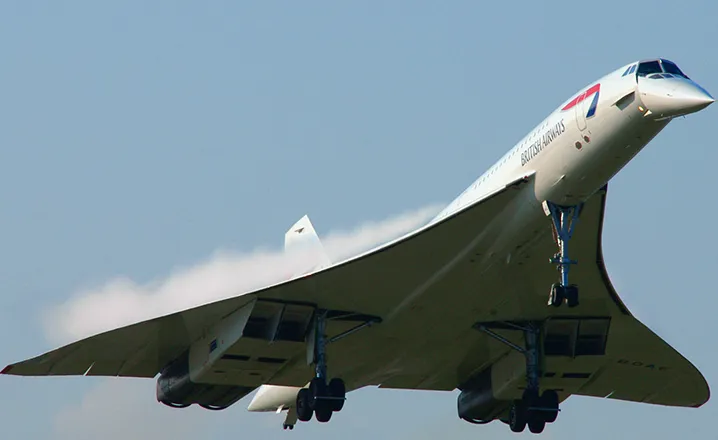
The venerable supersonic airliner still lives on in several places around the world, why trip between 3 in Europe?
01
What it is
This is a Concorde pilgrimage disguised as a European rail journey.
The aircraft are:
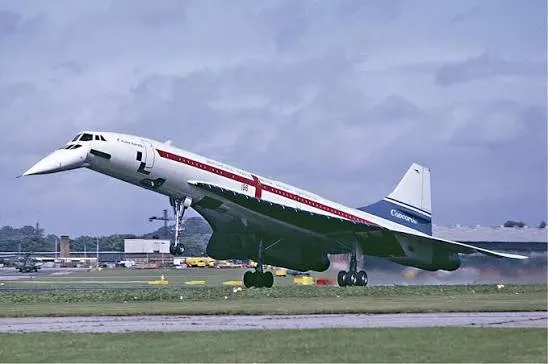
- G-AXDN at IWM Duxford: a British pre-production Concorde used to develop and refine the final airliner.
- F-WTSS at Paris-Le Bourget: Concorde 001, the first French prototype and the aircraft used to follow a total solar eclipse.
- F-BTSD at Paris-Le Bourget: a record-breaking Air France production Concorde known as Sierra Delta.
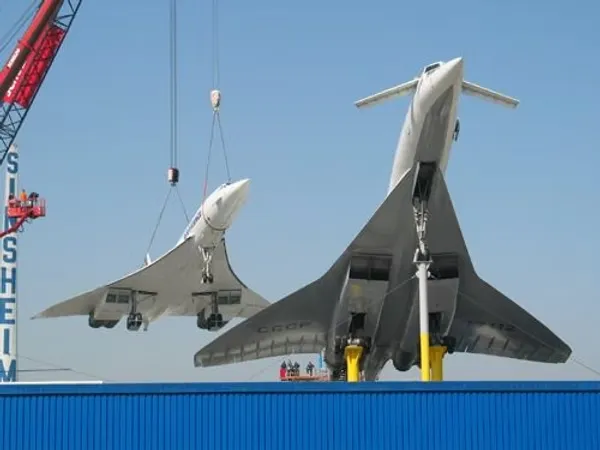
- F-BVFB at Technik Museum Sinsheim: an Air France production aircraft displayed beside a Tupolev Tu-144.
You will not fly at Mach 2. Instead, the route connects the surviving supersonic aircraft using regional trains, Eurostar, the Paris RER and either international high-speed rail or a short flight into Germany.
That is part of the appeal. Concorde was built to compress geography. This trip restores the scale of the continent, joining four grounded supersonic aircraft one railway at a time.
02
Why a Route Nerd would care
The journey brings four different Concorde stories together.
Duxford’s G-AXDN represents development: an aircraft built to test, measure and refine.
Le Bourget’s F-WTSS represents the beginning. It was the French prototype that opened Concorde’s flight envelope and turned a solar eclipse into a 74-minute airborne experiment.
Beside it, F-BTSD represents the mature airliner: a passenger-carrying Concorde that crossed the Atlantic, circled the world at record speed and participated in the type’s return to service.
Sinsheim’s F-BVFB represents preservation as spectacle. You can board it, examine the cabin and immediately compare it with the only other supersonic passenger aircraft to enter commercial service.
The connecting journey matters too. Concorde was designed to make geography feel smaller. Travelling between its surviving airframes by rail restores the scale of the continent—and reveals just how remarkable a three-and-a-half-hour transatlantic crossing really was.
03
How to experience it
A practical six-day itinerary
Day one — Duxford
Travel from London or Cambridge to IWM Duxford. Spend most of the day at the museum, then stay in London near St Pancras.
Day two — London to Paris
Take Eurostar to Gare du Nord. Spend the afternoon and evening in Paris.
Day three — Le Bourget
Take the RER B and bus 152 to the Musée de l’Air et de l’Espace. Give the museum most of the day and board both Concordes.
Day four — Paris to Germany
Travel from Paris Est to Mannheim by TGV or ICE, then continue towards Heidelberg or Sinsheim. Alternatively, transfer to Charles de Gaulle and fly to Frankfurt.
Day five — Sinsheim
Spend a full day at Technik Museum Sinsheim, including Concorde and the Tu-144.
Day six — Continue the journey
Return towards Frankfurt, Stuttgart or Paris, or continue deeper into Germany by rail.
The trip can be compressed into five days, but doing so leaves little room for delays or the rest of Paris. Six days keeps the museums at the centre of the journey without turning every connection into a deadline.
Stop one: Concorde 101 at IWM Duxford
The journey starts at IWM Duxford, a preserved airfield south of Cambridge.
Inside the AirSpace hangar is G-AXDN, commonly called Concorde 101. It is not an airline veteran but a pre-production aircraft: one of the machines used to bridge the gap between Concorde’s prototypes and the aircraft eventually delivered to British Airways and Air France.
This is the Concorde for studying how the design evolved. Look beyond the familiar delta-wing silhouette and notice the differences between a development aircraft and the later production examples you will see in France and Germany.
Concorde is usually accessible internally, although opening arrangements can change. The cabin is reached by steps, so confirm access with the museum before travelling.
Do not rush the rest of Duxford. AirSpace also contains an Avro Vulcan, Victor, Lancaster and other major British aircraft, while the American Air Museum adds the SR-71 Blackbird—a useful reminder that Concorde was not the only extraordinary high-speed aircraft of its era.
Getting there
Whittlesford Parkway is the nearest railway station. Trains serve it from London Liverpool Street and Cambridge, but the final connection to the museum requires planning. Local bus services are limited and may vary by day, while Whittlesford does not have a permanent taxi rank. Book a taxi in advance or check IWM’s current transport advice.
Duxford deserves most of a day. Afterwards, continue to London and stay near King’s Cross or St Pancras for the next morning’s Eurostar.
Stops two and three: the two Concordes of Le Bourget
The next leg replaces supersonic flight with high-speed rail.
Eurostar runs directly from London St Pancras to Paris Gare du Nord, with the fastest journeys taking a little over two hours. The train reaches up to 300 kilometres per hour on high-speed lines before arriving in central Paris.
The Musée de l’Air et de l’Espace occupies part of Aéroport de Paris–Le Bourget, about six kilometres north-east of Paris.
Le Bourget is the pivotal stop on this journey. Its dedicated Concorde Hall contains two aircraft facing one another: prototype F-WTSS and Air France production aircraft F-BTSD.
The museum describes itself as the only place in the world where visitors can see and visit two Concordes together.
F-WTSS: Concorde prototype 001
F-WTSS is where the French side of the Concorde story began.
The aircraft made its first flight from Toulouse on 2 March 1969, piloted by André Turcat. It passed Mach 1 later that year and reached Mach 2 in November 1970.
Its most remarkable flight came on 30 June 1973.
Scientists wanted to observe a total solar eclipse for longer than would be possible from a fixed point on the ground. Concorde 001 was modified into a flying laboratory and sent west-to-east across Africa at Mach 2, effectively chasing the Moon’s shadow.
The experiment gave the scientists 74 minutes of continuous totality—more than ten times the maximum duration available to an observer on the ground.
F-WTSS retired later that year after 397 test flights and 812 flying hours, including 255 hours at supersonic speed. It landed at Le Bourget on 19 October 1973 and was handed over to the museum.
At Duxford, you saw the pre-production aircraft used to refine Concorde. At Le Bourget, you can step backwards to the prototype that helped prove the basic idea would work.
F-BTSD: Sierra Delta
Facing the prototype is F-BTSD, a production Concorde that carried Air France passengers.
Known by the final two letters of its registration—Sierra Delta—it became one of the most distinguished members of the fleet.
F-BTSD set commercial round-the-world speed records in both directions. It completed one circumnavigation in 25 hours and 15 minutes in 1992, then travelled the opposite way around the world in 22 hours and 46 minutes in 1995.
It later participated in Concorde’s return to passenger service in November 2001. On 31 May 2003, it operated the final Air France supersonic service on the Paris–New York route before being delivered to Le Bourget on 14 June.
The contrast with F-WTSS is immediate. The prototype represents testing, experimentation and unanswered questions. Sierra Delta shows what that work eventually produced: a finished passenger aircraft capable of operating repeated commercial services across the Atlantic.
Visiting the aircraft
Access to the Concorde Hall is free, but entering the two aircraft requires the museum’s separate Boarding Pass ticket.
Both aircraft are reached by stairs and are not wheelchair accessible. The museum lists 22 steps at the entrance and 29 at the exit, with a narrow staircase.
Allow time for the rest of Le Bourget. The collection extends from early aviation and the two World Wars to French prototypes, helicopters, airliners and space flight. Major exhibits include a Boeing 747, Airbus A380, Ariane rocket models and Soyuz T-6 spacecraft.
The museum is closed on Mondays, so build the itinerary around a Tuesday-to-Sunday visit. Large suitcases are not permitted, making it better to leave luggage at your accommodation.
Getting to Le Bourget
From central Paris, take the RER B to Le Bourget station, then transfer to bus 152 and alight at Musée de l’Air et de l’Espace.
The museum says it is also possible to walk from Le Bourget RER station, allowing roughly 20 to 30 minutes. For a more direct surface journey, bus 350 serves the museum from the Porte de la Chapelle area.
Do not confuse Aéroport de Paris–Le Bourget with Paris-Charles de Gaulle. Le Bourget is a separate airport and does not have scheduled passenger terminals for this journey.
The choice: fly or take the train to Germany
After Le Bourget, the journey divides.
Option one: continue by train
For the most coherent Route Nerd itinerary, return to central Paris and depart from Gare de l’Est.
Direct TGV and ICE services connect Paris with Mannheim in around three hours on the fastest journeys. From Mannheim, continue by regional train—often via Heidelberg—to Sinsheim Museum/Arena.
This turns the journey into a rolling survey of European rail: British regional services, Eurostar, the Paris RER, French-German high-speed rail and finally a local line that stops almost beneath two supersonic aircraft.
Stay overnight in Mannheim, Heidelberg or Sinsheim. Heidelberg makes an attractive intermediate base, while Sinsheim is the most convenient choice for reaching the museum early.
Option two: fly from Paris
Le Bourget does not handle the scheduled passenger flights required for this itinerary. To fly to Germany, transfer to Paris-Charles de Gaulle and take a flight to Frankfurt.
From Frankfurt Airport, travel by rail towards Mannheim or Heidelberg, then connect to a regional service for Sinsheim Museum/Arena. Stuttgart may also work, depending on fares and schedules.
Flying may look faster on paper, but the transfer to Charles de Gaulle, airport formalities and onward rail journey reduce the advantage. Choose it because you want an additional aviation segment rather than because it is guaranteed to save time.
Stop three: Concorde and Tu-144 at Sinsheim
The finale is Technik Museum Sinsheim.
You will see the museum before you reach it. Concorde F-BVFB and Tupolev Tu-144 CCCP-77112 sit high above the roof, both pitched steeply into the sky.
F-BVFB joined Air France in 1976 and accumulated 14,771 flying hours across 5,473 flights. Its career included a round-the-world journey in 1988. After Concorde was retired, the aircraft travelled from Paris to Baden-Baden before completing an elaborate road and barge journey to Sinsheim.
Unlike the Charles de Gaulle aircraft, F-BVFB is open to museum visitors. Stairs climb onto the roof and into the passenger cabin, continuing towards the cockpit. The aircraft’s elevated position creates an unusually physical visit: the floor slopes sharply, the passage is narrow and you feel just how small Concorde’s cabin was.
Then walk directly into the Tu-144.
Sinsheim is the only museum where visitors can enter both supersonic passenger types in the same place. From below, their shared configuration makes them look like close relatives. Inside and at eye level, the differences become much clearer: the nose, wing planform, landing gear, cabin and engineering solutions reveal two separate approaches to the same improbable problem.
The museum recommends three to four hours for a normal visit, but a Route Nerd could easily spend the entire day here. Beyond the two supersonic aircraft, the collection includes locomotives, military aircraft, racing cars, record vehicles and enormous engines.
The station named Sinsheim Museum/Arena is about a five-minute walk from the entrance, making this the easiest of the three Concorde stops to reach by rail.
Follow the line
Route schematic
-
Day one — Duxford
Travel from London or Cambridge to IWM Duxford. Spend most of the day at the museum, then stay in London near St Pancras.
-
Day two — London to Paris
Take Eurostar to Gare du Nord. Spend the afternoon or evening in Paris.
-
Day three — Le Bourget
Take the RER B and bus 152 to the Musée de l’Air et de l’Espace. Give the museum most of the day and board both Concordes.
-
Day four — Paris to Germany
Travel to Mannheim by TGV or ICE and continue towards Sinsheim. Alternatively, fly to Frankfurt and make the onward rail connection.
-
Day five — Sinsheim
Give Technik Museum Sinsheim a full day. Stay locally, in Heidelberg or in Mannheim before continuing your journey.
-
Day six — Continue the journey
Return towards Frankfurt, Stuttgart or Paris, or continue deeper into Germany by rail.
04
Worth the detour?
Yes. This is no longer merely three aircraft connected by a convenient route. Le Bourget turns it into a survey of the entire Concorde story.
Duxford shows how the final design was developed. Le Bourget puts the original French prototype beside one of the most accomplished Air France aircraft. Sinsheim lets you finish inside a production Concorde before immediately boarding its Soviet rival.
Four Concordes. Three countries. Two aircraft facing each other in Paris. One Channel crossing—and a final railway platform almost beneath a pair of supersonic airliners.
Concorde may no longer shorten the journey. It can still give you a reason to make one.